
What Each Season Does to Your Home’s Exterior
 |
Published April 19, 2026 |
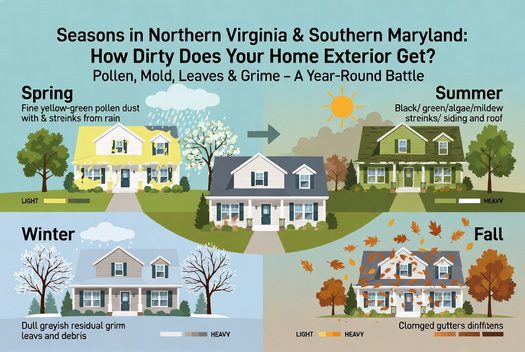
Every season in Northern Virginia and Southern Maryland deposits a different type of contamination on your home’s exterior. Spring floods surface with pollen and reactivate dormant mold. Summer heat and humidity drive algae and mildew growth across siding and roofing. Fall coats driveways and decks with tannin-staining leaf debris. Winter delivers road salt, freeze-thaw damage, and biological growth that survives until spring. Aqua Clean Solutions provides year-round exterior cleaning to keep up with every season’s threat.
Spring Cleaning (March–May): Pollen Overload and Rapid Yellow/Green Dust Buildup
This is peak “dirty season” for most properties. Tree pollen (from oak, maple, birch, pine, and others) explodes starting in late February/early March and hits its highest levels in April. Grass pollen ramps up in May.
- How dirty it gets: Fine yellow or greenish dust coats siding, roofs, decks, windows, cars, and outdoor furniture almost overnight. When mixed with morning dew or spring rains, it sticks tightly and can stain surfaces if left too long. North-facing or shaded areas stay damp longer, allowing early mildew to take hold alongside the pollen.
- Impact on exteriors: Homes can look dull and streaky within weeks. Pollen buildup traps other dirt and organic matter, making later cleaning harder and potentially accelerating oxidation or algae growth on siding.
- Typical conditions: Mild temperatures (50–70°F), frequent rain, and blooming trees everywhere.
Early spring cleaning is often recommended to remove winter grime before pollen hits full force.
A Mid-Summer’s Nightmare (June–August): Humidity, Mold, Mildew, and Algae Growth
Hot, sticky weather dominates (highs often in the 80s–90s°F with high humidity). Grass pollen lingers into early summer, then weed pollen begins. Frequent thunderstorms and long daylight hours keep surfaces moist.
- How dirty it gets: Humidity fuels black streaks, green algae, and mildew—especially on north- or shaded-facing siding, roofs, and concrete. Pollen and dust from earlier seasons bake on in the heat, while rain splashes up dirt from the ground. Insect residue, bird droppings, and sap add to the mix.
- Impact on exteriors: Shaded areas (common in wooded NoVA and Southern Maryland neighborhoods) develop visible streaks and fuzzy growth fastest. Without regular cleaning, this can lead to long-term discoloration, reduced curb appeal, and even minor structural wear over time.
- Typical conditions: High heat + humidity = perfect breeding ground for organic growth.
Midsummer cleaning helps remove baked-on grime before fall leaves arrive.
For a complete summer preparation guide, read: Preparing Your Home’s Exterior for the Summer.
Fall (September–November): Leaves, Debris, and Lingering Weed Pollen
Cooler temperatures (50–70°F) bring beautiful foliage, but also ragweed and other weed pollen peaking in August–October. Trees drop leaves heavily in October–November.
- How dirty it gets: Falling leaves, acorns, twigs, and pine needles accumulate on roofs, in gutters, on decks, and against foundations. Leftover pollen mixes with wet leaves to create a slimy layer that promotes mold. Rain and wind drive debris into crevices.
- Impact on exteriors: Gutters clog quickly (leading to water overflow and stains on siding). Leaf litter on roofs and decks can trap moisture, causing dark stains or slippery surfaces. Properties near trees look especially unkempt by late fall.
- Typical conditions: Pleasant days but increasing rain and wind.
A late-fall cleaning clears debris before winter and prevents buildup over the colder months.
A Christmas Delight or Disaster (December–February): Dampness, Residual Grime, and Slower Buildup
Mild winters (highs in the 40s°F, occasional light snow or ice) with less biological activity. Pollen is minimal.
- How dirty it gets: Damp, cool surfaces stay moist longer, allowing residual mold, mildew, and algae to persist or slowly grow (especially on roofs and north sides). Dust and dirt from prior seasons settle without being washed away by heavy rain. Road salt or wind-blown particles can add streaks near busier roads.
- Impact on exteriors: Less dramatic daily changes than other seasons, but unchecked winter grime makes spring pollen stickier and harder to remove later. Shaded or low-sun areas are most affected.
- Typical conditions: Cooler, occasional freezes, but rarely extreme.
Late-winter cleaning preps the property for the intense spring pollen season.
For detailed winter protection guidance, read: Winter Siding and Roofing Care Tips for Homeowners.
Key Takeaways for NoVA and Southern Maryland Property Owners
The climate here—humid, pollen-heavy, and with consistent moisture—means your home’s exterior works harder than in drier parts of the country. Pollen cycles, humidity-driven growth, and seasonal debris make one annual cleaning insufficient for most homes; many experts recommend at least two to three cleanings per year (early spring for pollen, midsummer for mold, and fall for leaves).
Regular exterior maintenance not only keeps your property looking its best (and protects curb appeal/value) but also prevents long-term issues like siding damage, roof staining, or mold-related problems. If you own a home in the area, timing cleanings around these seasonal patterns can save time, money, and hassle down the road. Local conditions vary slightly by neighborhood (e.g., more tree cover means more pollen/leaves), so a quick site assessment is always smart.
Why This Region Is Harder on Home Exteriors Than Most
The combination of Potomac watershed humidity, a heavy regional tree canopy, true four-season weather, and aggressive road salt application creates year-round contamination pressure that most homeowners underestimate.
Winter: Road Salt, Freeze-Thaw Cycles, and Hidden Growth
Winter’s primary threat is chemical rather than biological, though both are present.
- Road salt applied by VDOT and Maryland SHA travels via vehicle spray and foot traffic onto driveways, walkways, brick, and lower siding
- Chloride compounds corrode concrete, attack brick mortar, and cause efflorescence on masonry surfaces
- Repeated freeze-thaw cycles drive moisture into siding seams and caulk lines, causing separation and water intrusion over time
- Mold and algae do not die in winter. They go dormant and expand the moment spring arrives
Best action: Post-winter cleaning in late February or early March to remove salt residue before pollen season begins.
Year-Round Cleaning Calendar at a Glance
| Season | Primary Threat | Priority Action |
|---|---|---|
| ❄️ Late Winter | Salt residue, winter grime | Driveway and lower siding cleaning |
| 🌸 Spring | Pollen, mold reactivation | Full soft wash of siding and roof |
| ☀️ Summer | Algae, mildew | Roof and siding soft wash, deck cleaning |
| 🍂 Fall | Tannin staining, debris | Full exterior cleaning, gutter clearing |
Get a Free Estimate
Your home faces a new threat every season. Aqua Clean Solutions serves homeowners throughout Northern Virginia and Southern Maryland with soft house washing, roof cleaning, concrete cleaning, deck cleaning, and more.
Request Your Free Estimate Today
Frequently Asked Questions
What season is worst for home exterior contamination in Northern Virginia? Spring. Heavy regional pollen coats every surface from late February through May, bonds to siding and roofing when wet, and feeds mold and algae growth if not removed promptly.
Does rain clean my home’s exterior? No. Rain redistributes pollen, mold spores, and organic debris across surfaces rather than removing them. Professional cleaning eliminates contaminants at the source.
How does road salt damage my driveway and siding? Chloride compounds in road salt cause concrete spalling, brick mortar breakdown, efflorescence, and corrosion of metal flashing and fasteners. Post-winter cleaning removes residue before damage accumulates.
When should I schedule professional exterior cleaning in Northern Virginia? The two highest-impact windows are late spring after peak pollen and fall before freezing temperatures. Most homes benefit from at least two professional cleanings per year on this schedule.
What is soft washing? Soft washing uses low-pressure water and biodegradable solutions to kill mold, algae, and mildew at the cellular level. It is the manufacturer-approved method for asphalt shingle roofing and the safest option for vinyl and wood siding.