
How Pollen Season in Virginia Impacts Your Home’s Exterior
 |
Published April 4, 2026 |
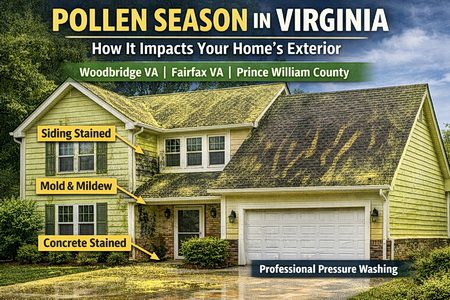
Pollen in Northern Virginia can cause many cleaning issues
Let’s Talk About Pollen
Aqua Clean Solutions provides professional exterior cleaning services in Virginia to remove pollen buildup that can stain siding, clog gutters, and damage surfaces, helping homeowners protect their property during peak season with safe, effective pressure washing and maintenance solutions.
What Does This Powdery Substance Do to Your Home’s Exterior?
In Northern Virginia, it does more than create a visible yellow coating. As it accumulates on your home’s exterior, it combines with humidity, rain, and airborne contaminants to form a sticky film that adheres tightly to surfaces. This film is difficult to remove with simple rinsing and can cling to siding, windows, and outdoor structures.
Over time, this buildup reduces the appearance of your home while also creating conditions that allow organic growth, such as algae and mildew, to develop. What begins as a seasonal nuisance can quickly turn into a maintenance issue if left untreated.
Why This is a Bigger Problem in Virginia
Virginia’s climate makes this allergen especially aggressive compared to other regions. The combination of dense tree populations, extended spring seasons, and high humidity levels creates an environment where it is both abundant and persistent.
Instead of drying and blowing away, it can stick and accumulate. Moisture in the air causes it to bond with surfaces, particularly in shaded areas of the home. This leads to prolonged exposure, which increases the likelihood of staining, discoloration, and organic buildup.
Homes surrounded by trees or located in suburban and wooded areas experience even heavier accumulation, making regular exterior maintenance more important.
Can Pollen Actually Damage Your Home?
Yes, it can contribute to long-term damage if it is not properly removed. While it may seem harmless at first, it acts as an organic material that retains moisture and feeds microbial growth.
When left on surfaces, it can gradually degrade finishes and create conditions that shorten the lifespan of exterior materials. Painted surfaces may begin to dull, siding can develop stains, and roofing materials may become more vulnerable to algae streaking.
The real issue is not just the allergen itself, but what it leads to, which includes trapped moisture, biological growth, and surface breakdown over time.
Where It Builds Up the Most
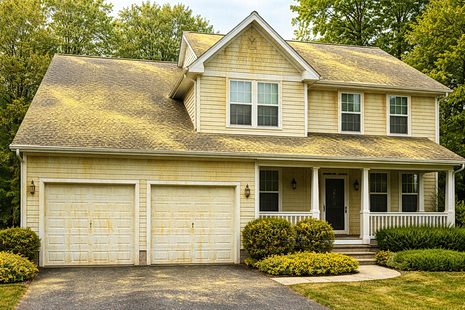
It does not settle evenly across your home. Certain areas naturally collect more buildup due to airflow patterns, surface texture, and moisture exposure.
Horizontal and textured surfaces tend to trap pollen more easily, while areas that receive less sunlight remain damp longer, allowing this powdery substance to stick and accumulate. This is why siding, especially on shaded sides of the home, often shows the heaviest staining.
Rooflines, gutters, and outdoor living spaces like decks and patios are also high-impact zones. These areas not only collect the powder but also hold debris and moisture, compounding the problem.
How to Effectively Remove Pollen from Your Home
Removing it requires more than a quick rinse with a hose. Because it forms a sticky layer, it must be broken down and lifted from surfaces using the correct cleaning method.
Professional soft washing is the most effective approach. This process uses low pressure combined with specialized cleaning solutions to safely dissolve buildup without damaging siding, paint, or roofing materials.
Unlike high-pressure washing, which can force debris deeper into surfaces or cause damage, soft washing targets the root of the buildup. It ensures that this substance, along with any developing organic growth, is fully removed rather than temporarily displaced.
Why DIY Cleaning Often Falls Short
Many homeowners attempt to clean it by using garden hoses or pressure washers, but these methods are often ineffective or even harmful. Water alone does not break down the sticky composition of this substance, which means residue is frequently left behind.
High-pressure washing can also create unintended damage. It can strip paint, force water behind siding, or leave visible streaking patterns where it was unevenly removed.
Without the proper technique and cleaning solutions, DIY efforts tend to provide only short-term visual improvement rather than a complete and lasting clean.
Professional Removal in Virginia
Aqua Clean Solutions provides exterior cleaning services designed specifically for the environmental conditions found in Northern Virginia. Their approach focuses on safely removing it while protecting the integrity of your home’s surfaces.
By using controlled soft washing methods, they are able to eliminate buildup from siding, roofs, gutters, and outdoor areas without causing damage. This not only restores the appearance of your home but also helps prevent the long-term issues associated with organic accumulation.
Their services are particularly valuable during peak pollen season, when buildup occurs rapidly and requires more thorough treatment.
How Often Should You Clean Pollen Off Your Home?
In Virginia, pollen levels can remain high for extended periods, making timing an important factor in maintenance. Most homes benefit from at least one professional cleaning during peak season, followed by another after the season ends.
This approach ensures that buildup does not have time to settle and cause staining or biological growth. Homes in heavily wooded areas or regions with higher counts may require more frequent attention to maintain optimal conditions.
How to Reduce Future Buildup
While this powder cannot be completely avoided, there are practical steps homeowners can take to reduce accumulation and minimize its impact.
Regular maintenance plays a key role. Keeping gutters clean allows water to flow properly, preventing it from collecting in damp areas. Light rinsing between professional cleanings can help reduce surface buildup, especially on high-exposure areas.
Landscaping adjustments, such as trimming overhanging branches, can also limit the amount that directly settles onto your home.
When Does Pollen Season Start in Northern Virginia?
The season typically begins in early spring and peaks between March and May. During this time, tree pollen is the primary contributor, often creating the heavy yellow coating seen on homes, vehicles, and outdoor surfaces.
However, it remains present throughout the year. Grass and weed pollen can extend the season into summer and early fall, meaning that homes may be exposed to varying levels of buildup for several months.
Understanding this timeline helps homeowners plan cleaning schedules more effectively and prevent long-term accumulation.

What does it do to the exterior of a home?
It forms a fine, sticky layer on surfaces like siding, roofs, windows, and driveways. Over time, this buildup traps moisture, which can lead to staining, discoloration, and the growth of mold or algae if not removed.
Why is the buildup worse in Virginia compared to other areas?
Virginia experiences dense tree coverage and long growing seasons, which increase both the duration and intensity of production. Warmer temperatures have extended seasons, making buildup more persistent on exterior surfaces.
Can it damage siding, concrete, or wood surfaces?
Yes. While the powder itself is not inherently corrosive, it mixes with dirt and moisture to create an abrasive layer that can wear down paint, stain surfaces, and contribute to organic growth like mildew and algae.
How often should you clean your home during pollen season?
During peak season, homeowners should consider cleaning or rinsing surfaces every few weeks, with a full professional power washing recommended after the season ends to remove buildup completely and prevent long-term damage.
When is the best time to power wash after season?
The best time is typically late April through mid-May, when the levels begin to drop. Cleaning too early can result in surfaces becoming quickly re-coated, reducing the effectiveness of the service.
Can pollen affect exterior paint or finishes?
It does not directly damage paint, but if it is not removed before painting or sealing, it can interfere with adhesion, causing peeling, flaking, or uneven finishes over time.
What areas of a property are most affected?
Common problem areas include siding, roofs, gutters, decks, fences, driveways, and outdoor furniture. Gutters are especially vulnerable because the substance mixes with debris and can cause clogs and drainage issues.
How does professional power washing help during pollen season?
Professional power washing removes its buildup from all exterior surfaces, preventing staining, mold growth, and long-term damage while restoring the home’s appearance and protecting property value.
Is rain enough to wash pollen off a house?
Rain can temporarily reduce buildup, but it often spreads the residue across surfaces or pushes it into crevices. Without proper cleaning, it can still leave behind stains and contribute to organic growth.
For a complete overview of exterior home and commercial cleaning, please visit our guide to exterior cleaning.