
Should You Clean Your Roof Before Installing Solar Panels?
 |
Published July 18, 2026 |
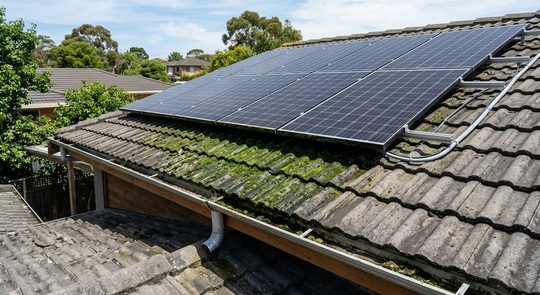
Be sure to speak to a professional exterior cleaning service before purchasing solar panels. AI-generated for illustrative purposes only
Should You Clean Your Roof Before Installing Solar Panels?
A roof should generally be inspected and cleaned before solar panels are installed to remove algae, moss, lichen, and debris that could become trapped underneath. Aqua Clean Solutions uses a controlled, low-pressure process for roofs with existing panels, carefully protecting wiring, mounting hardware, and electrical components to prevent damage.
Why Should a Roof Be Cleaned Before Solar Panels Are Installed?
Cleaning is not always required. A relatively new roof with no visible algae, moss, lichen, or debris may not need treatment. A roof with black streaks, green growth, moss, leaves, or heavy organic buildup should be evaluated before installation, since solar panels can cover a significant portion of the roof and make growth harder to see and reach afterward.
Professional roof cleaning before installation can:
- Remove algae, moss, lichen, pollen, and organic buildup
- Improve visibility during the roof inspection
- Expose shingles that may need closer examination
- Reduce existing growth beneath the solar array
- Make future roof maintenance more manageable
- Provide a cleaner starting point for the installation
Cleaning does not replace an inspection. A qualified roofer or solar installer should still determine whether the roof is structurally sound and has sufficient remaining service life for a solar system.
The Roof Should Be Inspected Before It Is Cleaned
Important conditions to check for before scheduling cleaning include loose, cracked, curled, or missing shingles; active leaks; soft or damaged decking; deteriorated flashing; excessive granule loss; damaged gutters; moss growing beneath shingles; and areas that may not safely support workers or equipment. A cleaning company removes exterior buildup; it does not certify the structural condition. When a roof is nearing the end of its useful life, replacing it before solar installation may prevent the added expense of removing and reinstalling the array later.
Why High Pressure Should Not Be Used on Asphalt Shingles
Asphalt shingles contain protective granules that shield the roof from sunlight and weather. Aggressive pressure can loosen those granules, lift shingles, force water beneath roofing materials, or damage flashing and seals. Aqua Clean Solutions uses a controlled, low-pressure roof cleaning process designed to remove biological growth without relying on the force used to clean hard surfaces. The cleaning solution does most of the work by treating algae, moss, and lichen directly, allowing dead growth to loosen and wash away gradually.
Homeowners can learn more about this process on our Northern Virginia roof cleaning services page (URL needed).
What Should Happen Before the Solar Installation Date?
A practical sequence:
- Have the roof inspected. A roofer or qualified solar professional should evaluate its condition, remaining life, drainage, and ability to support the proposed system.
- Complete necessary repairs: loose shingles, damaged flashing, leaks, rotted decking, or other defects should be corrected before cleaning and installation.
- Professionally clean the roof; algae, moss, lichen, leaves, and other buildup should be treated using a roof-appropriate method.
- Allow the roof to dry and be reevaluated — the installer should confirm the planned mounting areas are ready.
- Install the solar system. The contractor positions rails, mounts, wiring, and panels on a roof that has already received needed maintenance.
Coordinate the cleaning and installation companies when the schedule is tight or the array covers a large portion of the roof.
Can a Roof Be Cleaned After Solar Panels Are Installed?
Yes. A roof with solar panels can still be cleaned, but it cannot be treated exactly like an unobstructed roof. The cleaning company must first determine where panels and mounting rails sit, how much surface remains accessible, where wiring and connection points are located, how runoff will travel, and whether the installer has any special restrictions. The solar system should be treated as electrical equipment, not simply another roof surface, and roof cleaners should never disconnect, move, step on, or attempt to repair panels, wiring, mounts, or inverters.
How Is a Roof Cleaned Once Solar Panels Are Installed?
The exact process depends on the roof material, roof pitch, panel arrangement, mounting system, amount of organic growth, and accessibility. A professional plan generally includes:
Inspect the roof and array from accessible areas, evaluating visible growth, debris, access points, drainage, and equipment to identify which areas can be cleaned safely.
Protect electrical and solar components: cleaning solution should never be intentionally directed into electrical boxes, exposed connections, conduits, or inverter equipment, and uncontrolled high pressure should never be used near them.
Apply treatment only where it can be controlled, with low-pressure application on accessible sections, adjusted near panel edges, mounting rails, valleys, skylights, and flashing.
Avoid walking on the panels; stepping on them can damage the glass, frame, internal cells, seals, wiring, or mounting system.
Manage runoff by evaluating where water and solution will flow, protecting gutters, downspouts, siding, decks, and landscaping as needed.
Leave inaccessible areas alone when necessary. A cleaner should never force equipment beneath panels or disturb wiring to reach tightly spaced sections; the homeowner may need to contact the solar installer about temporary panel removal.
Can the Roof Under Solar Panels Be Cleaned?
That depends on the clearance and arrangement of the mounting system. Some arrays leave room for air movement and limited visual inspection, but that doesn’t necessarily mean there’s enough room to clean safely. Tools should never be pushed beneath panels without understanding the location of wiring, connectors, and roof penetrations. Minor loose debris may sometimes be addressed from an accessible edge, but heavier buildup or damage beneath the array may require help from the original solar installer, who can determine whether panels must be temporarily removed.
Are the Solar Panels Cleaned at the Same Time?
Roof cleaning and solar panel cleaning are related but separate services. The roof may need a treatment formulated for algae, moss, or lichen, while panels have glass, coatings, seals, and electrical connections that may require different products and procedures. A product that is suitable for asphalt shingles may not be approved for solar-panel glass or protective coatings. Before anyone cleans the panels, the homeowner should review the manufacturer’s care instructions, the installer’s maintenance recommendations, the warranty, approved products, and any restrictions on pressure, temperature, or chemicals.
What Causes Roof Buildup Around Solar Panels?
- Shade panel arrays create shaded areas that dry more slowly, which can contribute to biological growth.
- Leaves and pine needle debris collect along edges, rails, valleys, and narrow spaces around the array.
- Bird activity, feathers, nesting material, and droppings can accumulate around the system.
- Pollen and airborne dirt in Northern Virginia’s seasonal pollen mix with moisture and debris on the roof.
- Existing algae and moss growth present before installation doesn’t disappear once panels cover the area, which is one reason cleaning beforehand matters.
How Often Should a Roof With Solar Panels Be Inspected?
There’s no single schedule for every property. A roof surrounded by mature trees may collect debris faster than an open, sunny roof, and shaded or north-facing sections may stay damp longer. Homeowners should periodically watch for new black streaks or green growth, moss along panel edges, blocked gutters, bird activity, water staining near penetrations, and a noticeable, unexplained decline in solar production, understanding that production drops can also stem from electrical or monitoring issues unrelated to cleanliness.
Should Solar Panels Be Removed for Routine Roof Cleaning?
Generally, no, not for ordinary cleaning of accessible areas. Removal may be considered when the roof needs replacement, a leak or damage sits beneath the array, heavy moss or debris can’t be safely accessed, animals have nested underneath, mounting penetrations need repair, or the solar installer determines it’s necessary. Panels should only be disconnected, removed, and reinstalled by qualified solar professionals.
Signs the Roof Should Be Cleaned Before Installation
Black streaks, green algae, moss or lichen, leaves collecting in valleys, organic buildup near gutters, dark damp areas beneath tree cover, heavy bird activity, and debris around vents or skylights are all reasons to have the roof professionally evaluated. Addressing these before installation is usually easier than reaching them after the array is in place.
Professional Roof Cleaning in Northern Virginia
Aqua Clean Solutions provides professional roof cleaning for homes and properties throughout Northern Virginia, with a process built around the roofing material, growth type, landscaping, drainage, and any equipment already installed. When solar panels are planned, cleaning the roof beforehand provides a cleaner surface for inspection and installation. When panels are already present, we evaluate accessible areas and develop a controlled approach that avoids interfering with the solar equipment.
Contact Aqua Clean Solutions to request an evaluation before scheduling your solar-panel installation, or to discuss cleaning accessible roof surfaces around an existing array.
Frequently Asked Questions
Should I pressure wash my roof before installing solar panels?
No. High pressure can damage asphalt shingles, remove protective granules, lift roofing materials, and force water beneath the surface. A controlled, low pressure method is more appropriate.
Does every roof need to be cleaned before solar panels are installed?
No. A clean roof with no visible organic growth may not need treatment, but black streaks, moss, lichen, or other buildup should be evaluated before installation.
Can algae continue growing underneath solar panels?
Shaded, damp areas can support growth, particularly where algae or moss were already present. Cleaning beforehand reduces existing growth, but future conditions depend on shade, moisture, and maintenance.
Can a roof cleaner move solar panels to reach underneath them?
No. Only qualified solar professionals should handle panels, wiring, and mounting equipment.
Can soft washing damage solar panels?
Any method can cause problems with the wrong chemicals, pressure, or technique. Roof cleaning solution should never automatically be applied to panel surfaces; the manufacturer’s instructions must be followed.
Can high pressure be used between solar panels?
No. It could affect wiring, electrical connections, seals, mounting points, or roofing materials.
Who should clean the area beneath solar panels?
Accessible loose debris may sometimes be addressed without disturbing the array. When panels block access, the solar installer should determine whether temporary removal is required.
Should the roof be replaced before solar panels are installed?
A qualified roofer and solar installer should evaluate the roof’s age, condition, and remaining service life, since installing a long-lasting array on a roof needing replacement soon can mean added removal and reinstallation costs.
Are solar panel cleaning and roof cleaning the same service?
No. They’re made from different materials with different cleaning requirements; products used on shingles may not suit panel glass, coatings, or electrical equipment.
When should I schedule roof cleaning before solar installation?
After the initial inspection and any necessary repairs, but before the installation date, with enough time for the roof to dry and be reevaluated.